Concrete Pools in Wagga: Design Options and How Long They Last
Freedom Pools & Spas Riverina • July 8, 2026
Concrete pools in Wagga are what most people picture when they imagine their ideal backyard pool — a shape that fits the yard rather than the yard fitting the pool, a finish that matches the house, and a structure built to last for decades. They’re also the pool type that comes with the most questions: how much does it cost, how long does it take to build, how long will it last, and is it worth it over a fibreglass option?
This guide covers concrete pool design options available to Wagga homeowners, gives you a straight answer on lifespan, and explains why Wagga’s reactive clay soil makes the engineering decisions particularly important. We’re not going to give you invented price ranges or sidestep the trade-offs — that’s not how we’ve operated for over 30 years building pools across the Riverina.
Why Wagga Homeowners Choose Concrete
The core appeal of a concrete pool is full customisation. There is no standard size, no catalogue shape and no off-the-shelf finish. A concrete pool is engineered and built to a specific design, which means the pool works around your yard, your house and your preferences rather than the other way around.
This matters particularly on Wagga blocks, which vary enormously — from compact suburban lots in Estella and Bourkelands where every metre counts, to larger rural lifestyle properties on the outskirts where a pool can become a proper centrepiece of the outdoor space. A fibreglass shell has to be delivered by truck and dropped into a hole. A concrete pool is built on site, which means there’s no practical limit on size, shape or configuration imposed by transport logistics.
The other reason people choose concrete is permanence. A well-built concrete pool becomes part of the property in a way that’s different to a fibreglass installation — it appreciates with the house, it’s fully integrated into the surrounding landscaping, and with proper maintenance it will genuinely outlast most other things in the backyard.
Concrete Pool Design Options for Wagga Backyards
Shape & Size
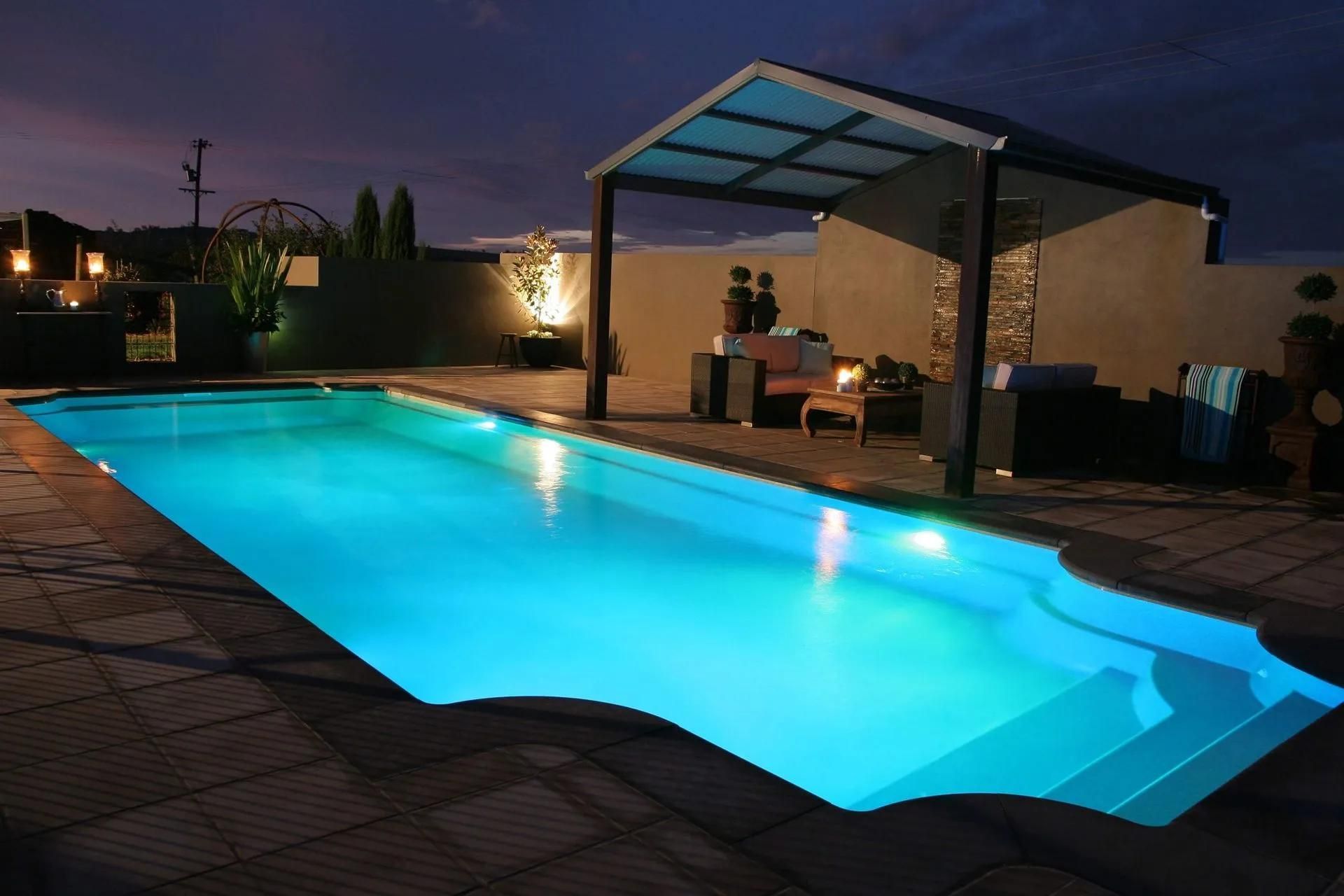
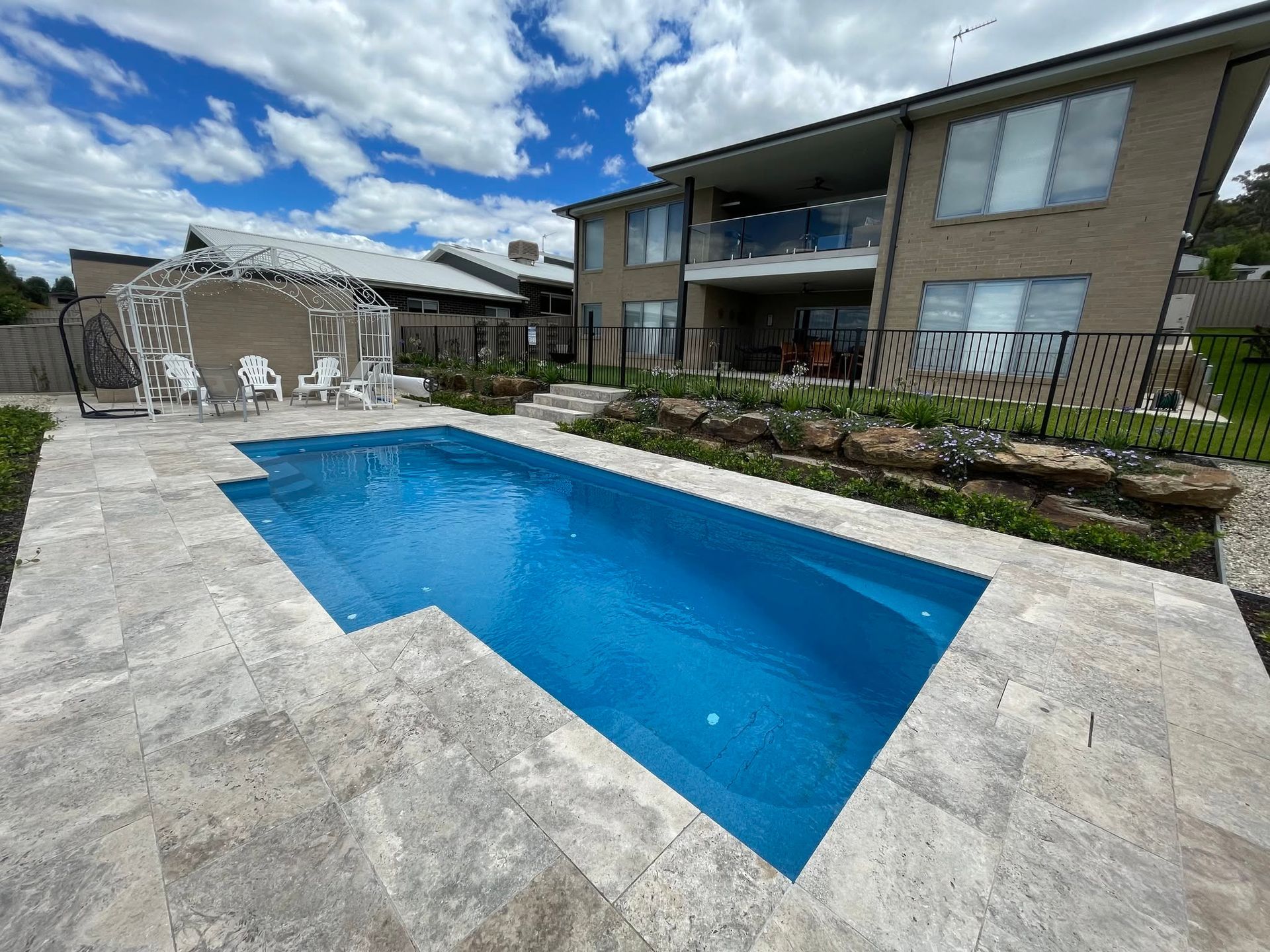
Concrete allows any shape: rectangular lap pools, curved free-form designs, L-shapes that fit around existing structures, pools with attached spas, or shallow-entry beach styles. The only constraints are the property boundary setbacks set by Wagga Wagga City Council and the site engineering requirements.
Depth can also be designed to purpose. A family pool with a dedicated shallow play area and a deeper end for diving is straightforward to specify in concrete. A lap pool designed for serious swimming can be built to competition depth. These options are simply not available with a fibreglass shell.
Surface Finishes
The interior finish of a concrete pool significantly affects its appearance, feel and maintenance requirements. The main options available through Freedom Pools:
- Pebblecrete and pebble aggregate finishes — textured, durable and available in a wide colour range. One of the most popular finishes in the Riverina for its practical performance and natural look
- Fully tiled pools — premium appearance, more glass-smooth underfoot, available in ceramic, porcelain or glass mosaic. Higher installation cost but excellent longevity and the clearest water appearance
- Render and paint — the most cost-effective concrete finish. Requires repainting every 7 to 10 years but allows colour changes between resurfacings
- Exposed aggregate quartz finishes — mid-range price point, good durability and a refined appearance that suits more contemporary landscaping styles
Features & Additions
Because concrete pools are built rather than dropped in, additional features are incorporated during construction rather than added awkwardly afterwards. Features that Wagga clients commonly include:
- Infinity or negative-edge designs — particularly striking on sloped blocks where the pool appears to flow into the surrounding landscape
- Attached or adjacent concrete spas with shared heating and filtration
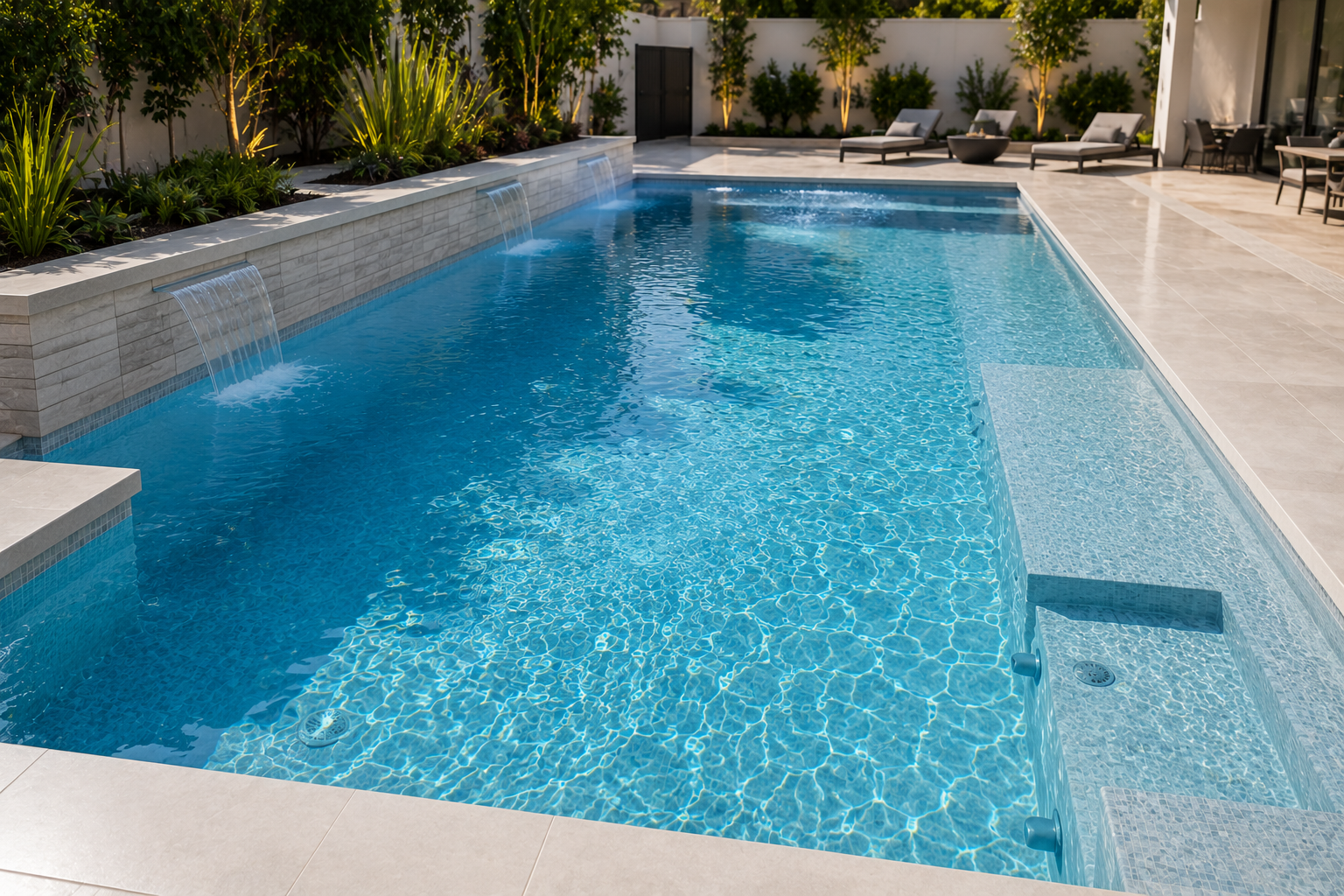
- In-built water features such as deck jets, blade falls and cascades
- Integrated LED lighting packages, including colour-changing options
- Sun shelves and shallow-entry bays for young children or lounging
How Long Do Concrete Pools Last?
The honest answer: a properly built and maintained concrete pool will last 50 years or more. The shell itself — the structural gunite or shotcrete layer — does not have a practical end of life under normal residential conditions. What does require periodic renewal is the interior surface finish.
Pebblecrete and aggregate finishes typically last 15 to 25 years before resurfacing is needed, depending on water chemistry management and usage. Tiled pools last longer between major works but tiles and grout do require maintenance over decades. Rendered and painted pools need recoating every 7 to 10 years — a more frequent cycle, but each coat is significantly less costly than a full resurfacing.
The other components — plumbing, filtration, heating, electrical — have their own service lives and will be replaced or upgraded over the lifetime of the pool, as they would be for any pool type. None of this changes the fundamental point: the concrete structure you build today is likely to be in the ground long after everything else around it has been renovated.
Concrete Pools & Wagga’s Reactive Clay Soil
This is the section of a concrete pool discussion that most national pool websites skip, because they’re writing for a general audience. Wagga Wagga has a specific soil profile that any pool builder operating here needs to understand: reactive clay soils that expand when wet and contract when dry, creating ground movement that is particularly pronounced in the seasonal conditions of the Riverina.
Concrete pools in Wagga require geotechnical assessment and appropriate engineering to account for this movement. The pool shell needs to be reinforced and designed to handle the soil conditions of the specific site — not just the standard residential engineering specification that might apply in Sydney or Melbourne. A pool built without proper site assessment on Wagga’s clay soils can develop structural cracking that compromises both the shell integrity and the surface finish.
Our pool installation process includes a site assessment and geotechnical review before any design is finalised — because what’s under the ground matters as much as what you put on top of it.
Cost & Build Time Compared to Fibreglass
Concrete pools cost more than fibreglass and take longer to build. That’s the honest summary. The cost premium reflects the additional labour, the on-site construction time and the engineering involved. Build time for a concrete pool in Wagga is typically 8 to 14 weeks from excavation to handover, compared to 3 to 5 weeks for a fibreglass installation.
We’ve covered the full fibreglass vs concrete comparison in detail on our concrete pool page, including a more detailed breakdown of what drives the cost difference. If you’re still weighing up which type is right for your situation, that’s the right place to start.
Frequently Asked Questions About Concrete Pools in Wagga
Ready to Design Your Concrete Pool in Wagga?
Freedom Pools & Spas Riverina has been building pools across Wagga and the Riverina for over 30 years. We’re a licensed pool builder and SPASA member, and we’ve designed and installed concrete pools on everything from compact suburban lots to large rural properties across the region.
If you’re at the research stage and want to talk through design options, build timelines and what a concrete pool is likely to cost for your specific block, we offer a no-obligation design consultation and fixed-price quote.
Call us on (02) 6971 0818 or
get in touch online — we’re based in Wagga and we know these soils, this climate and what works here.